
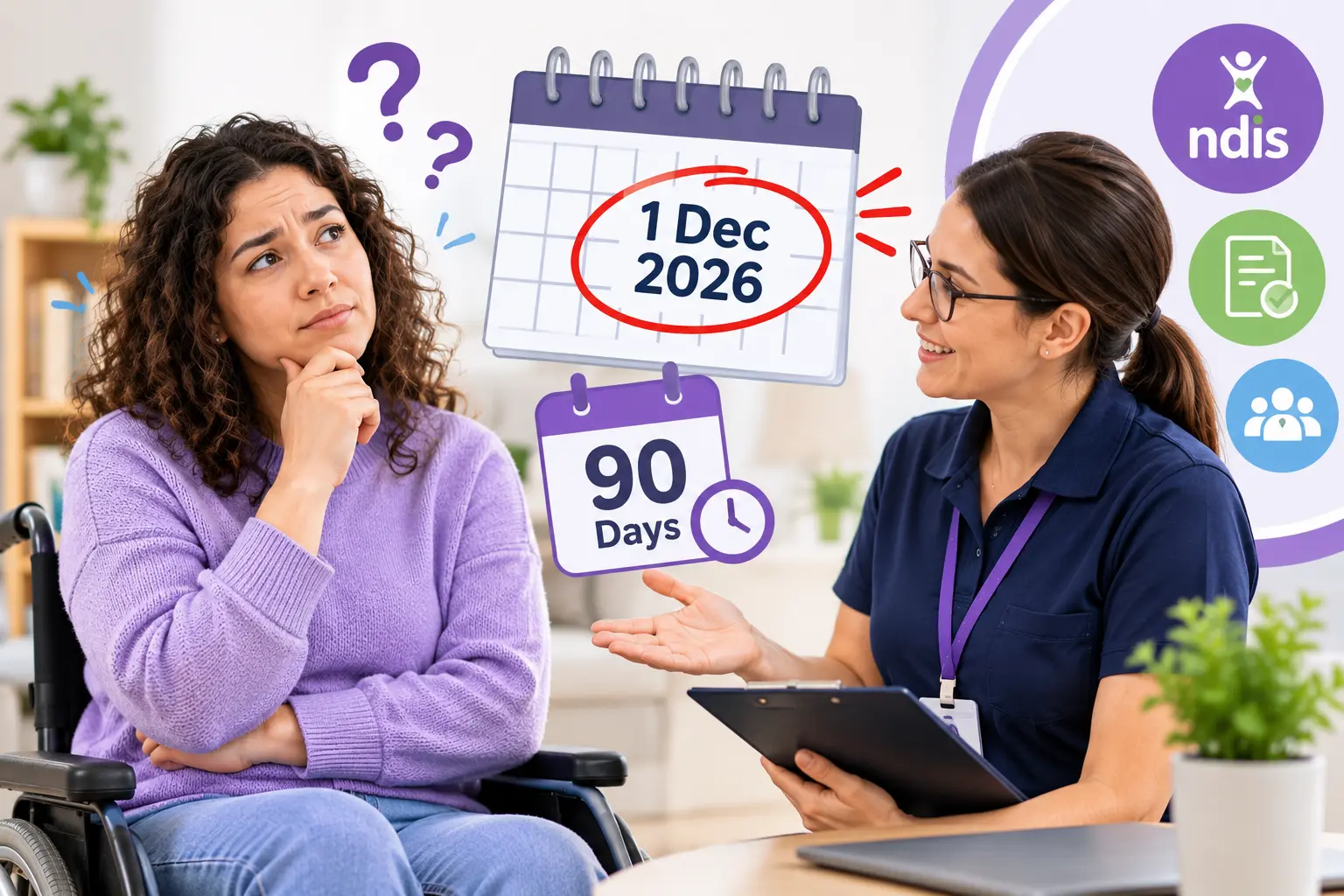
The NDIS 90 day claim limit is an important change that Australian disability support participants, families, plan managers and providers need to understand before 1 December 2026. The new claiming timeframe requires claims for NDIS supports to be submitted within 90 days of the date the support was delivered. Claims submitted after this period will not be paid unless exceptional circumstances apply.
The change is designed to improve payment accuracy, strengthen accountability and protect NDIS funding from incorrect or inappropriate claims.
For participants who receive personal care, assistance with daily activities, community participation or independent living support, understanding the new requirements can help prevent confusion about invoices and payments. You can also explore ProTeam Care Group’s NDIS and disability support services to learn more about the assistance available to participants.
ProTeam Care Group believes that participants should have clear information about changes that may affect their support arrangements. This guide explains the NDIS 90-day claiming timeframe, who needs to prepare, what happens when a claim is late and how participants and providers can manage the change.
What Is the NDIS 90-Day Claim Limit?
The NDIS 90-day claim limit is a new payment claiming requirement introduced by the National Disability Insurance Agency (NDIA).
From 1 December 2026, claims for NDIS supports must be submitted within 90 days of the date the support was delivered.
Previously, the NDIS allowed longer periods for submitting certain claims. The new requirement introduces a shorter timeframe and places greater importance on accurate records and prompt invoice processing.
In practical terms, people involved in managing NDIS funding need to make sure eligible claims are not left outstanding for months.
For example, imagine a participant receives assistance with daily activities on 5 December 2026. The relevant claimant needs to make sure the claim is submitted within the applicable 90-day period.
The important detail is that the timeframe is calculated from the date the support was delivered, not simply the date an invoice was received.
The NDIA has also made it clear that claims submitted more than 90 days after support delivery will not be paid unless exceptional circumstances apply.
Why Has the NDIS Introduced the 90-Day Rule?
The NDIS provides funding to help eligible Australians access disability-related supports. Making sure that payments are accurate and properly supported is an important part of protecting the scheme.
When claims are submitted long after a service has been delivered, it can become more difficult to confirm what happened. Invoices may be missing, service records may be incomplete and participants or providers may struggle to verify older transactions.
The new NDIS 90 day claim limit aims to encourage:
- Faster submission of payment claims.
- Better record-keeping by providers.
- More accurate service and invoice information.
- Earlier identification of payment problems.
- Greater accountability for NDIS funding.
- Stronger checks against incorrect or inappropriate claims.
The NDIA has also increased its checks on older claims. In its November 2026 announcement, it reported that more than 265,000 high-risk claims worth over $420 million had been reviewed across two financial years. More than 135,000 claims were rejected.
These checks demonstrate why accurate records and appropriate supporting evidence matter.
You can read the NDIA’s announcement about stronger NDIS claim checks for further information.
When Does the NDIS 90-Day Claim Limit Start?
The new NDIS 90 day claim limit starts on 1 December 2026.
From this date, the new timeframe applies to claims for supports delivered under the NDIS.
Participants, providers and plan managers should review their current arrangements before the commencement date.
The NDIA has specifically advised providers and plan managers to identify outstanding claims, resolve delays and submit eligible claims as soon as possible.
What Should Happen Before 1 December 2026?
The period before the new rule begins is an important time to review outstanding invoices and claims.
For example, a disability support provider may have delivered personal care or community participation support several weeks or months ago but still have an invoice waiting to be processed.
If that invoice remains outstanding, there may be a risk of payment delays or problems once the new claiming timeframe begins.
Participants and providers should:
- Review outstanding invoices and payment requests.
- Check that all service dates are accurate.
- Identify claims that have not yet been submitted.
- Resolve missing information or incorrect details.
- Contact plan managers about unpaid invoices.
- Submit eligible outstanding claims promptly.
- Keep supporting documents and service records.
Do not assume that every older claim will automatically be accepted after 1 December. Check the NDIA’s current transitional guidance if you have outstanding claims.
Does the 90-Day Period Start From the Invoice Date?
No, the important date is when the support was delivered.
For example:
A participant receives support on 10 December 2026. The provider sends the invoice on 15 January 2027.
The claiming timeframe is still measured from 10 December 2026. Sending the invoice later does not create a new 90-day period.
This is why providers should issue invoices promptly and participants should follow up when expected invoices are missing.
Who Is Affected by the NDIS 90-Day Claim Limit?
The new NDIS claiming timeframe is relevant to participants, providers and plan managers.
However, the responsibilities differ depending on how the participant’s NDIS plan is managed.
1. Self-Managed NDIS Participants
Self-managed participants are responsible for managing their own NDIS funding and making sure their claims and records are accurate.
Under the new arrangement, participants should pay attention to when they receive support and when they submit their payment claims.
Practical steps include:
- Keep invoices from disability support providers.
- Record the dates of services received.
- Submit eligible claims promptly.
- Keep copies of receipts and payment confirmations.
- Check that the support matches your NDIS plan.
- Contact the NDIA if you need clarification about a claim.
For example, if you receive weekly personal care assistance, organise invoices by service date rather than allowing several months of paperwork to accumulate.
A simple spreadsheet or digital folder can make this process easier.
2. Plan-Managed NDIS Participants
Plan-managed participants use a plan manager to help manage their NDIS funding and process provider invoices.
Although the plan manager handles the financial administration, participants still have an important role.
Providers generally send their invoices directly to the plan manager. The plan manager checks the details and submits eligible claims through the relevant NDIS systems.
Participants can help by:
- Checking that the services listed on invoices were received.
- Responding to requests for clarification.
- Following up on unpaid invoices.
- Reporting incorrect service dates or descriptions.
- Keeping copies of relevant support records.
For example, if a personal care provider sends an invoice to your plan manager, check that the dates and services match the support you received.
If something is incorrect, raise the issue as soon as possible.
Plan managers should also communicate with providers when information is missing or needs correction.
3. NDIA-Managed NDIS Participants
For NDIA-managed participants, providers generally submit payment requests through the relevant NDIS provider systems.
Participants should still understand what is being claimed on their behalf.
It is useful to check that:
- The support was actually delivered.
- The service dates are correct.
- The support is consistent with the participant’s plan.
- The provider has the correct information.
- Any questions about the claim are resolved promptly.
If you notice a service or date that does not match your records, contact the provider or NDIA.
4. NDIS Providers
Providers also have important responsibilities under the new claiming requirements.
They should submit invoices and eligible claims promptly after delivering supports.
They must also keep accurate service records and appropriate evidence showing that the support was delivered.
Providers should review their systems to identify invoices and claims approaching the 90-day deadline.
The NDIA has specifically advised providers not to change service dates or other claim details to bring an older claim within the 90-day timeframe.
Accurate records protect participants, providers and the wider NDIS.
What Happens If an NDIS Claim Is Submitted After 90 Days?
One of the biggest concerns surrounding the NDIS 90 day claim limit is what happens when a payment claim misses the deadline.
From 1 December 2026, claims submitted more than 90 days after the support was delivered will not be paid unless exceptional circumstances apply.
This means a late claim should not be treated as automatically payable just because the service was delivered.
The NDIA may consider an individual request where exceptional circumstances prevented the claim from being submitted within the required timeframe.
Can You Still Make a Late NDIS Claim?
You can contact the NDIA and request consideration of a late claim if exceptional circumstances prevented timely submission.
However, making an enquiry does not guarantee payment.
The NDIA will consider each request individually. You will need to explain what happened, why the claim could not be submitted on time and provide supporting evidence.
Circumstances that may need to be explained could include:
- Serious or unexpected events that prevented timely claiming.
- Circumstances outside the participant’s or provider’s control.
- Significant system or administrative problems that affected submission.
These are examples of circumstances that may be relevant to an enquiry, not a guaranteed list of approved exceptions.
The NDIA makes the final decision based on the information and evidence provided.
How Do You Request an Exception for a Late Claim?
If you believe exceptional circumstances prevented you from submitting a claim within 90 days, contact the NDIA through an individual Claim and Payment Enquiry.
Follow these steps.
Step 1: Identify the outstanding claim
Record the date the support was delivered, the provider’s details, invoice information and the amount being claimed.
Step 2: Explain why the claim was delayed
Describe what happened and why the claim could not be submitted within the required period.
Step 3: Gather supporting evidence
Depending on your circumstances, this may include invoices, emails, correspondence, records of system problems or other relevant documents.
Step 4: Submit an individual enquiry
Explain the situation clearly and provide the available evidence.
Step 5: Wait for the NDIA’s assessment
The NDIA will review the circumstances and decide whether the late claim can be paid.
Keep copies of your enquiry and any correspondence.
How Can NDIS Participants Avoid Missing the 90-Day Claim Deadline?
Managing NDIS invoices does not need to be complicated. A simple record-keeping routine can help participants stay organised and reduce the risk of payment problems.
Here are five practical ways to prepare.
1. Keep a Record of Your Support Dates
Record the date each NDIS support is delivered.
This is especially helpful if you regularly receive personal care, assistance with daily activities, household support or community participation.
A simple spreadsheet can help you keep track.
| Support date | Type of support | Provider | Invoice status |
|---|---|---|---|
| 5 December 2026 | Personal care | Provider A | Received |
| 12 December 2026 | Daily living support | Provider B | Submitted |
| 19 December 2026 | Community participation | Provider A | Pending |
Update your records whenever you receive a service or invoice.
This makes it easier to identify outstanding payments and follow up before deadlines become an issue.
2. Check Invoices as Soon as You Receive Them
Do not leave invoices unopened or wait until the end of the quarter to review them.
Check the following details:
- Participant information.
- Provider details.
- Service dates.
- Description of the support delivered.
- Amount being charged.
- Relevant support information.
If something is incorrect, contact the provider or plan manager promptly.
Resolving an invoice problem early is generally easier than trying to fix it close to the deadline.
3. Communicate With Your Disability Support Provider
Clear communication can help prevent unnecessary payment delays.
Ask your provider how frequently invoices are issued and where they are sent.
If you have not received an expected invoice, follow up.
You can also ask the provider to let you know if there are delays or missing details.
4. Keep Copies of Invoices and Receipts
Store invoices, receipts and payment confirmations in one secure location.
You could use a dedicated computer folder or a secure digital storage service.
Name your documents using the service date and type of support.
For example:
2026-12-05-Personal-Care-Invoice.pdf
Organised records can make it easier to resolve payment questions and provide evidence if the NDIA requests further information.
5. Follow Up With Your Plan Manager
If you use a plan manager, ask whether invoices have been received and processed.
If an invoice remains unpaid, find out what is causing the delay.
Ask whether any additional information or approval is required.
Remember that sending an invoice to a plan manager does not necessarily mean the claim has already been submitted to the NDIA.
What Should NDIS Providers Do Before 1 December 2026?
The new NDIS 90 day claim limit also means providers need to review their invoicing and payment processes.
Waiting until December to identify outstanding claims could create avoidable problems.
The NDIA has advised providers and plan managers to review outstanding invoices, check claim information and submit eligible claims promptly.
Providers should consider the following preparation checklist.
| Action | Why it matters |
|---|---|
| Review outstanding invoices | Identifies claims that may be delayed |
| Check service dates | Ensures accurate claiming information |
| Submit eligible claims promptly | Reduces the risk of missing deadlines |
| Check supporting records | Helps demonstrate that services were delivered |
| Follow up unpaid invoices | Helps resolve problems early |
| Update internal systems | Identifies claims approaching 90 days |
| Inform relevant staff | Makes sure everyone understands the change |
Providers should also make sure their invoices accurately reflect the services delivered.
For disability support organisations, this includes keeping appropriate records for personal care, daily living assistance and community participation.
Service dates must never be changed simply to make an older claim appear to fall within the required timeframe.
Accurate documentation is important for payment processing and participant protection.
Will the NDIS 90-Day Claim Limit Affect Your Disability Support Services?
The new claiming timeframe is a payment administration requirement. It does not automatically mean that a participant’s approved NDIS supports or funding will stop after 90 days.
However, it makes clear communication and accurate records more important for everyone involved in disability support.
Understanding how the change relates to everyday services can help participants avoid confusion.
Assistance With Daily Living
NDIS assistance with daily living can include practical help with everyday activities such as preparing meals, managing household routines and completing personal tasks.
If you receive this support, keep track of service dates and check invoices when they arrive.
The NDIS 90 day claim limit changes the timeframe for submitting claims, not the basic purpose of daily living assistance.
Personal Care Support
Personal care may involve assistance with hygiene, dressing, grooming and other daily routines.
Because personal care can be provided regularly, it is important to maintain accurate service records.
Participants should check that invoices reflect the personal care they received and contact their provider if any details are incorrect.
Community Participation
Community participation support can help NDIS participants access social activities, community events and opportunities to develop connections with others.
If you receive regular community participation support, keeping a record of service dates can help you understand your support arrangements and check invoices.
Learn more about our NDIS community participation support and how assistance can help participants access activities, develop social connections and stay involved in their local community.
Independent Living Support
Independent living support can involve help with everyday routines, household activities, meal preparation and developing practical living skills.
Participants should understand what services they receive and maintain clear communication with their support providers.
The new claiming requirements are a reminder to review invoices regularly and resolve payment questions early.
Does the 90-Day Rule Mean Your NDIS Support Will Stop?
No, the 90-day claiming timeframe does not automatically cancel your NDIS plan or stop your approved disability support services.
It changes the timeframe for submitting claims for delivered supports.
Your funding and support eligibility continue to depend on your individual NDIS plan and the applicable NDIS requirements.
If you are concerned about your funding or service arrangements, speak with your support coordinator, plan manager or the NDIA.
How ProTeam Care Group Supports NDIS Participants
Choosing disability support is about more than arranging help with everyday tasks. It is about finding support that respects your preferences, personal goals and independence.
ProTeam Care Group aims to provide personalised support that recognises each participant’s individual needs.
Our disability support services focus on helping people manage everyday activities, maintain personal routines, participate in their communities and develop greater independence.
Depending on individual needs and agreed service arrangements, support may include:
- Assistance with daily living activities.
- Personal care and everyday routines.
- Support with independent living skills.
- Community participation and social activities.
- Personalised disability support.
- Assistance that respects individual choices and preferences.
We believe participants should be involved in decisions about their support.
Whether you need help with daily activities, personal care or becoming more confident with everyday routines, support should be based on what matters to you.
Understanding changes such as the NDIS 90 day claim limit can also help you stay informed about your funding and payment arrangements.
If you are looking for personalised disability support, visit our services and support page to explore the assistance available through ProTeam Care Group.
NDIS 90-Day Claim Limit: Participant Preparation Checklist
Before the new claiming timeframe starts, use this checklist to review your arrangements.
- Check whether you have outstanding NDIS invoices.
- Review claims that have not yet been submitted.
- Record the dates of the supports you receive.
- Check that invoices contain accurate service information.
- Contact your plan manager about outstanding payments.
- Ask your provider about its invoice submission process.
- Keep copies of invoices, receipts and supporting records.
- Resolve missing information as soon as possible.
- Understand how to contact the NDIA if exceptional circumstances cause a delay.
The most important thing is to avoid leaving claims until the last minute.
The NDIS 90 day claim limit makes timely communication and accurate record-keeping more important for participants, providers and plan managers.
By reviewing your arrangements regularly and dealing with outstanding invoices early, you can reduce the risk of unnecessary payment problems.
For the latest requirements, always refer to official NDIA guidance.