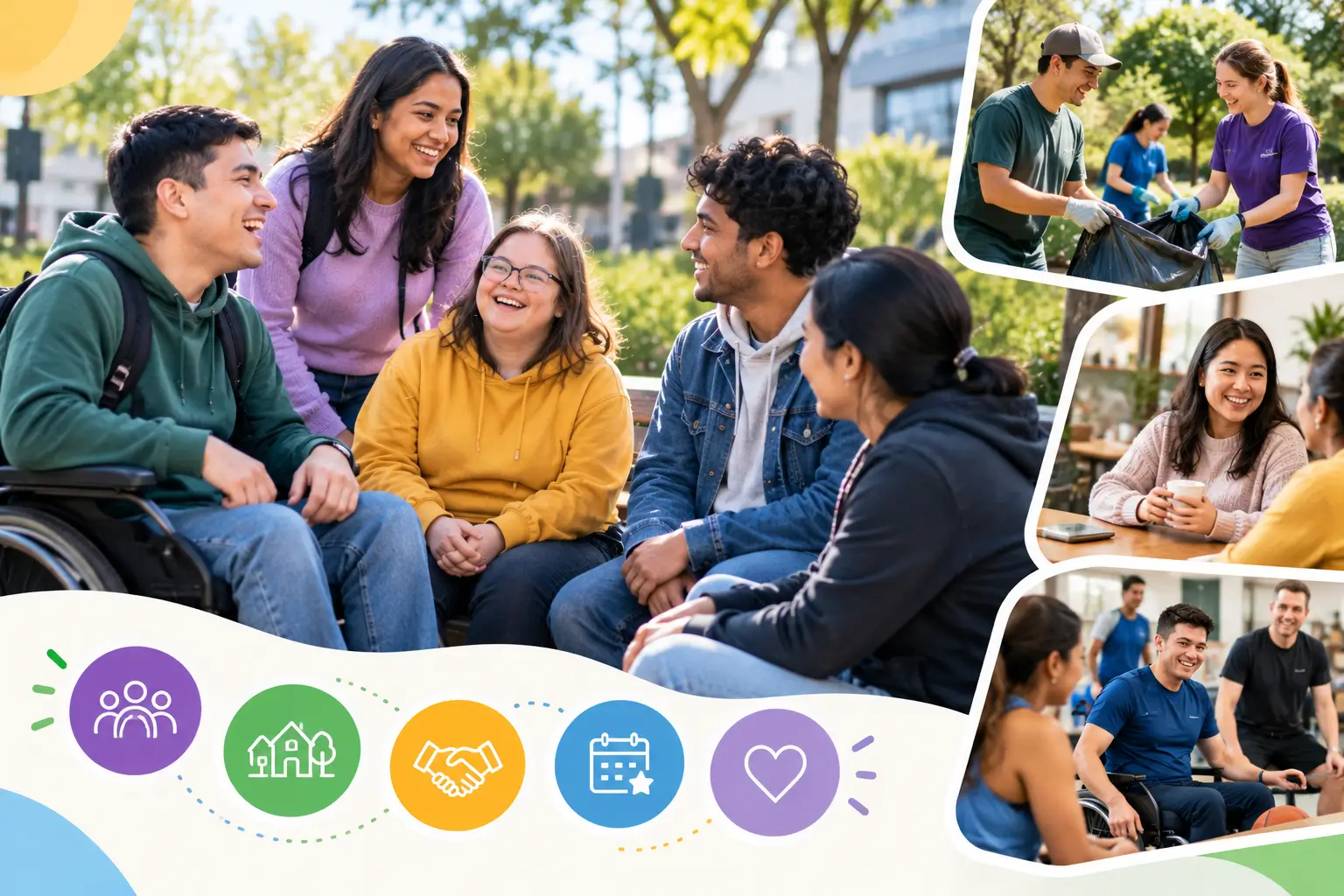
Staying connected with other people can be an important part of everyday life. Meeting friends, joining a local group, going to a sporting activity, visiting a library or simply getting out into the community can help you feel involved and included.
For some people with disability, getting involved in these activities can be difficult without the right support.
This is where NDIS Community Participation support may help.
Depending on your goals, needs and NDIS plan, support may help you get out into your local community, take part in activities you enjoy, meet other people and develop skills that make community participation easier.
The NDIS says funding for assistance with social and community participation may help participants spend more time in their local community and take part in social activities, groups and events. It may also help participants become more independent in engaging with their community and personal interests.
What Is NDIS Community Participation?
NDIS Community Participation refers to support that can help a person with disability take part in social, recreational and community activities.
The type of support can be different for every person.
For one person, it may mean having a support worker accompany them to a community group. For another person, it could mean getting help to attend a sporting activity, visit friends or take part in a hobby.
The NDIS also recognises that social and community participation can include activities that help people connect with others, build social skills and become more involved in their community.
The important thing is that the activity should relate to your goals and support needs.
Why Is Community Participation Important?
Being part of a community can mean different things to different people.
You might enjoy spending time with a small group of friends. Someone else may prefer a busy sporting club. Another person may enjoy visiting a quiet library or joining an art class.
Community participation can give you opportunities to:
- Meet new people
- Spend time with friends
- Develop friendships
- Take part in hobbies
- Try new activities
- Practise communication skills
- Build confidence
- Become more familiar with local places
- Develop greater independence
- Feel more connected to your community
NDIS research found that participants described community participation as a way to build a sense of belonging and connection, develop relationships, grow social networks and feel more confident and safe in the community.
How Can NDIS Community Participation Support Help?
Support can make it easier to take part in activities that may otherwise be difficult to access.
A support worker may help you plan an activity, prepare for an outing, travel to a location or take part in the activity.
For example, you may want to join a local art group but feel unsure about going alone.
A support worker could help you find out where the group meets, plan your trip and accompany you while you get used to the new environment.
Over time, you may feel comfortable attending with less assistance.
The NDIS explains that support workers can help participants attend social events and activities and can provide support with community participation based on their goals and needs.
What Activities Can You Do With Community Participation Support?
There is no single activity that suits everyone.
Your interests, goals, abilities and support needs should help guide the activities you choose.
Some examples include:
Social Groups
You might enjoy joining a local social group where you can meet people and spend time together.
This could include a community group, hobby group or other regular gathering.
A support worker can help you get comfortable with the location and understand how the activity works.
Sports and Physical Activities
Sports can be a good way to spend time outside the home and meet people with similar interests.
Depending on your interests and abilities, this could include:
- Walking groups
- Swimming
- Adaptive sports
- Gym activities
- Bowling
- Basketball
- Tennis
- Outdoor activities
The type of activity should be based on what you enjoy and what is suitable for your needs.
Arts and Creative Activities
Not everyone enjoys sport.
You might prefer painting, drawing, music, craft, photography, drama or another creative activity.
NDIS research identified art-based activities, including music, drama and art, as activities that can support social participation.
Libraries and Community Centres
Libraries and community centres can provide places to learn, meet people and take part in local activities.
You may attend a reading group, computer session, workshop or other community event.
A support worker can help you become familiar with the location and work out what support you need to participate.
Visiting Friends and Family
Community participation is not only about joining organised groups.
It can also include spending time with people who are already important to you.
You might need support to visit a family member, meet a friend for coffee or attend a social gathering.
Having the right assistance can make these activities easier to manage.
How Support Can Help You Try Something New
Trying a new activity can feel uncomfortable, especially if you do not know what to expect.
You may worry about:
- Meeting new people
- Finding the location
- Using public transport
- Communicating with others
- Understanding the activity
- Managing changes to your routine
- Staying safe
- Knowing what to do if you need help
A support worker can help you prepare before you go.
For example, you could visit the location before the activity starts. You could also discuss what will happen and plan what to do if you feel uncomfortable.
Taking small steps can make a new activity feel more manageable.
NDIS Community Participation and Building Confidence
Confidence can grow through practice.
You may initially need a lot of support to attend an activity. After several visits, you may become familiar with the place, people and routine.
You may then need fewer reminders or less assistance.
For example:
First visit: A support worker accompanies you and helps you understand the activity.
Next few visits: You take part while the support worker stays nearby.
Later: You become familiar with the group and need less help.
This does not mean everyone needs to work towards attending activities without support.
Some people may always need assistance, and that is okay.
The purpose of support is to help you participate in a way that works for you.
How Community Participation Can Help You Meet People
Making friends can be difficult for anyone.
For people with disability, there can be extra barriers that make meeting people harder.
NDIS research identified barriers such as difficulty finding suitable activities, limited transport, low confidence and difficulty finding support workers who match a person’s needs and interests.
Finding an activity that matches your interests can make social connection easier.
For example, if you enjoy music, joining a music group gives you something in common with other people.
If you enjoy animals, you might look for a suitable community activity involving animals.
If you enjoy sport, a local sporting group may give you regular opportunities to meet people.
You do not have to force yourself into an activity simply because it is available.
Your interests matter.
How Support Workers Can Help You Stay Connected
A support worker can provide different types of assistance depending on your needs.
This may include:
- Planning activities
- Helping you prepare for an outing
- Supporting communication
- Helping with transport arrangements
- Accompanying you to activities
- Providing assistance with daily tasks during an outing
- Helping you become familiar with new places
- Supporting you to take part in activities
- Helping you practise social skills
- Providing support when you need it
The NDIS says the level of support from a support worker depends on the person’s needs, goals and the supports included in their plan.
A good support arrangement should be based on what you want to do, rather than simply filling time.
Choosing Activities That Match Your Interests
The best activity is not necessarily the most popular one.
It should be something you actually want to do.
Start by thinking about what you enjoy.
Ask yourself:
- What did I enjoy doing before?
- What activities would I like to try?
- Do I prefer groups or one-to-one activities?
- Do I enjoy indoor or outdoor activities?
- Do I want to meet new people?
- Are there hobbies I would like to start again?
- What places in my local area would I like to visit?
- What support would make these activities easier?
Your answers can help you find activities that are a good match.
NDIS Community Participation and Local Activities
Your local community may have more options than you realise.
Depending on where you live, you may find:
- Community centres
- Libraries
- Sporting clubs
- Recreation centres
- Art groups
- Music groups
- Hobby clubs
- Volunteer programs
- Local events
- Social groups
- Accessible recreation programs
You can also ask your support coordinator, support worker or local NDIS partner about community options.
The NDIS says community connections can help people with disability find local community and mainstream supports, including community groups and peer groups.
What If You Feel Nervous About Going Out?
Feeling nervous about a new activity is normal.
You do not have to attend a large event or busy group straight away.
You could start with something smaller.
For example, you might:
- Choose an activity that interests you.
- Find out more about the activity.
- Visit the location with someone you trust.
- Attend for a short time.
- Talk to one or two people.
- Decide whether you would like to return.
You can take your time.
The right level of support can make it easier to try something new without feeling rushed.
How Community Participation Can Support Everyday Skills
Community activities can also give you opportunities to practise everyday skills.
For example, going to a community centre may help you practise:
- Communication
- Planning
- Time management
- Making choices
- Following directions
- Using public transport
- Handling unexpected changes
- Asking for assistance
- Interacting with other people
These skills can be useful in other parts of your life too.
For some people, community activities can become a regular part of their weekly routine.
What Does the NDIS Pay for?
It is important to understand that NDIS funding does not automatically pay for every activity you want to do.
The support must meet the relevant NDIS funding rules and be connected to your plan.
The NDIS states that the Assistance with Social and Community Participation category can fund support workers to help participants engage with their community and personal interests when this is included in their plan.
However, the NDIS does not generally pay ordinary costs that everyone has to pay for recreational activities.
For example, the NDIS social and recreation guideline explains that participants generally still pay the ordinary costs of their activities, such as membership, basic equipment or entrance fees.
If you are unsure whether something can be paid from your NDIS funding, check your plan and speak with your NDIS contact or support coordinator.
How to Set Community Participation Goals
A clear goal can help you decide what type of support you need.
Instead of saying:
“I want to get out more.”
You could make the goal more specific:
“I want to attend a local art group twice a month.”
Or:
“I want to join a walking group and become comfortable attending with support.”
Your goal can be small.
You might start with one activity and see how you feel.
As you become more comfortable, you can decide whether you want to try something else.
What If You Cannot Find the Right Activity?
Sometimes the first activity you try will not be right for you.
That is okay.
You might find that the group is too large, the location is difficult to access or the activity does not interest you.
Instead of giving up, think about what did not work.
Maybe you would prefer:
- A smaller group
- A quieter location
- A different time of day
- A one-to-one activity
- A different type of hobby
- A closer location
- More support
Finding the right activity may take some time.
The goal is to find something that fits your interests and needs.
How Proteam Group Can Support Community Participation
At Proteam Group, disability support can be tailored around the individual needs and goals of each person.
Community participation can involve more than simply getting from one place to another.
It can be about helping you take part in activities you enjoy, maintain relationships and feel more comfortable in your local community.
Depending on your support needs and plan, a support worker may assist with planning, attending activities, community outings and other everyday support.
If you are looking for disability support, you can learn more about Proteam Group’s disability support services and the types of support available.
How to Get Started With Community Participation Support
Start by thinking about what you would like to do.
You do not need to have everything planned.
Write down a few activities you enjoy or would like to try.
Then think about what makes participation difficult for you.
For example, you may need help with:
- Getting ready
- Travel
- Communication
- Physical access
- Understanding a new place
- Staying safe
- Meeting new people
- Managing changes
You can then discuss these needs with your support coordinator, NDIS contact or support provider.
The NDIS also provides information about social and community participation supports and how they relate to participant goals.
Final Thoughts
NDIS Community Participation can help people with disability take part in activities, spend time with others and stay connected with their local community.
Support can look different for every person.
For some people, it may mean joining a sports group. For others, it could mean visiting friends, attending a hobby group, going to the library or trying a new community activity.
You do not have to become completely independent before taking part.
You can receive support while you learn, practise and become more comfortable.
The most important thing is finding activities that match your interests, needs and goals.
With the right support, community participation can become a regular and enjoyable part of everyday life.